
HIV Care and Treatment

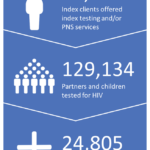
Index testing, including partner notification services (PNS), is a key strategy to identify and support those most at risk of acquiring HIV: sexual contacts, needle-sharing partners, and biological children of newly diagnosed HIV+ individuals.[1] Its implementation is critical to controlling the HIV epidemic and meeting the UNAIDS target that 95% of people living with HIV will know their status. Evidence from Cameroon, Kenya, Malawi, and Mozambique has demonstrated PNS is feasible, safe, and highly effective.[2-6] Additional data suggest PNS improves HIV prevention uptake, linkage to treatment, and sustained engagement in HIV care.[7-9] In December 2016, the World Health Organization issued guidelines recommending that PNS “be offered as part of a comprehensive package of testing and care offered to persons with HIV.”[10] PEPFAR has since supported efforts to bring PNS to scale across supported countries.

I-TECH and the University of Washington have extensive experience in index testing research and programming including direct service delivery; quality improvement; training; policy and guideline development; and monitoring and evaluation. I-TECH promotes evidence-based index testing and counseling strategies focused on reaching recent sexual contacts and all biological children, placing them at the forefront of HIV case identification programs to reach epidemic control.

  1. Golden M, et al. Partner notification for sexually transmitted infections including HIV infection: an evidence-based assessment. Sexually transmitted diseases. 4th edn. McGraw-Hill; New York, NY: 2007.
  2. Brown LB, et al. HIV partner notification is effective and feasible in sub-Saharan Africa: opportunities for HIV treatment and prevention. J Acquir Immune Defic Syndr. 2011 Apr 15;56(5):437-42.
  3. Henley C, et al. Scale-up and case-finding effectiveness of an HIV partner services program in Cameroon: an innovative HIV prevention intervention for developing countries. Sex Transm Dis. 2013 Dec;40(12):909-14.
  4. Rosenberg NE, et al. Recruiting male partners for couple HIV testing and counselling in Malawi’s option B+ programme: an unblinded randomised controlled trial. Lancet HIV. 2015 Nov;2(11):e483-91.
  5. Myers RS, et al. Acceptability and Effectiveness of Assisted Human Immunodeficiency Virus Partner Services in Mozambique: Results From a Pilot Program in a Public, Urban Clinic. Sex Transm Dis. 2016 Nov;43(11):690-695.
  6. Cherutich P, et al. Assisted partner services for HIV in Kenya: a cluster randomised controlled trial. Lancet HIV. 2017 Feb;4(2):e74-e82.
  7. Myer L, et al. Family matters: Co-enrollment of family members into care is associated with improved outcomes for HIV-infected women initiating antiretroviral therapy. J Acquir Immune Defic Syndr. 2014 Dec 1;67 Suppl 4:S243-9.
  8. Vreeman RC, et al. Disclosure of HIV status to children in resource-limited settings: a systematic review. J Int AIDS Soc. 2013 May 27;16:18466.
  9. Walcott MM, et al. Facilitating HIV status disclosure for pregnant women and partners in rural Kenya: a qualitative study. BMC Public Health. 2013 Dec 2;13:1115.
  10. World Health Organization. Guidelines on HIV Self-Testing and Partner Notification. 2016.

Program Highlights

Innovative Training Models in Tanzania

I-TECH Tanzania has implemented many pre- and in-service training initiatives and materials, as well as adopted TrainSMART. TrainSMART I-TECH Tanzania adopted TrainSMART, a database system created by I-TECH, to track health care worker (HCW) training, and has integrated TrainSMART with the national Human Resource Information System (HRIS). The TrainSMART system helps to ensure a strong and…
Read more

Assisted Partner Notification Services in Namibia: Comparison of Case-Finding in Persons With New and Previously Diagnosed Human Immunodeficiency Virus, and Success as a Platform for PrEP Referral.

O’Bryan G, Chirairo H, Munyayi F, Ensminger A, Barnabee G, Dzinotyiweyi E, Mwandingi L, Ashipala L, Forster N, O’Malley G, Golden M. Assisted Partner Notification Services in Namibia: Comparison of Case-Finding in Persons With New and Previously Diagnosed Human Immunodeficiency Virus, and Success as a Platform for PrEP Referral. Sex Transm Dis. 2024 Mar 1;51(3):214-219. doi: 10.1097/OLQ.0000000000001922

Read more
Projects

Pre-Exposure Prophylaxis for HIV Prevention in Namibia

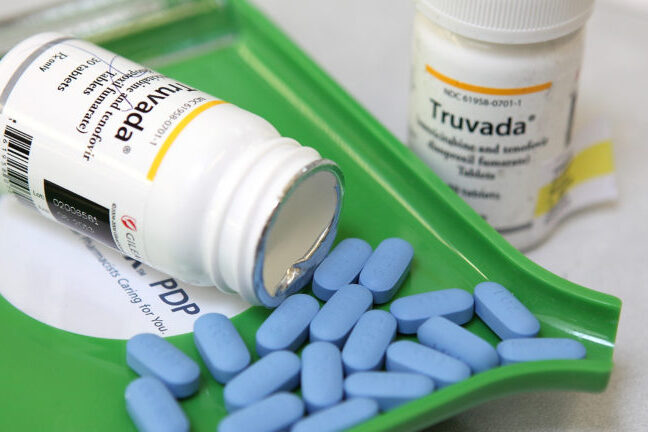
I-TECH began supporting the implementation of pre-exposure prophylaxis (PrEP) as part of Namibia’s combination HIV prevention strategy in 2017. I-TECH’s support for PrEP in Namibia is focused on three key areas: site-level direct service delivery support for PrEP for adolescent girls and young women (AGYW); site-level technical assistance to strengthen facility-based delivery of PrEP for…

Read more
Projects

Facility-Based HIV Testing Services in Namibia

As a key component of I-TECH’s support to HIV care continuum strengthening in Namibia, I-TECH supports the Ministry of Health and Social Services in efforts to achieve the UNAIDS target of “90% of people living with HIV will have a known status.” I-TECH supports above-site HIV testing activities at region-and national-levels, as well as technical assistance and…

Read more