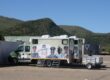
For more than 15 years, ITECH (then an affiliate of I-TECH/UW, and funded by PEPFAR through the US CDC) has played a sustained role in strengthening Namibia’s HIV testing workforce through large-scale capacity building of frontline health care workers. On average, 350 Health Assistants and Nurses (including other Implementing Partners supporting the MoHSS) were trained annually in HIV Rapid Testing and Provider-Initiated HIV Testing and Counselling (PITC). Over the 15 years, this represents an estimated 5,250 health care workers trained, creating a substantial pool of competent providers capable of delivering HIV testing and counselling services within routine health care settings.
A key component of this work was ensuring that training translated into recognised competency and sustained service delivery capacity. ITECH facilitated the certification of trained Health Assistants and Nurses as HIV Rapid Testers through the Namibia Institute of Pathology (NIP) and the Ministry of Health and Social Services (MoHSS). This linkage between training, competency certification, and service delivery strengthened the quality assurance pathway for HIV rapid testing and supported the availability of appropriately qualified personnel within the health system.
The programme’s contribution extends beyond the number of individuals trained. By strengthening the competencies of frontline health workers and supporting their formal certification, the intervention contributed to the institutionalisation of HIV testing capacity within Namibia’s public health system. It reduced reliance on ad hoc or externally supported testing capacity by embedding skills within the existing health workforce and supporting national standards for HIV rapid testing.
Over more than a decade and a half, this sustained investment in health worker capacity has contributed to a stronger and more capable HIV service delivery platform. The scale and continuity of the training and certification effort demonstrate a significant contribution to health-system strengthening, quality HIV testing services, and Namibia’s broader national HIV response, while creating a foundation for continued delivery of HIV testing and counselling services at facility level.